
Weather and environment
Dust storms, wind, radiation damage and a detailed thermal regime are not implemented yet.
Robosoma uses real data about Mars, but it does not pretend to be an exact copy of the planet or an engineering simulator. The three layers are separated plainly below.
| Layer | What belongs to it | How to read it |
|---|---|---|
| Real data | Radius, the global MOLA relief, the optional HRSC/MOLA pack, gravity, day length and atmospheric composition. | The numbers and maps come from scientific sources. |
| Game model | Movement on slopes, site suitability, mining, logistics, ballistic flight and fuel consumption. | Based on physical meaning, but simplified and tuned for play. |
| Procedural | Small roughness, individual rocks, the exact position and reserves of deposits. | These details are not a map of a real ore body. |
| Fiction | The Robosoma, the events of 2026-2041, the machine standard, the colonies and the wars. | An invented history of the future, not a forecast. |
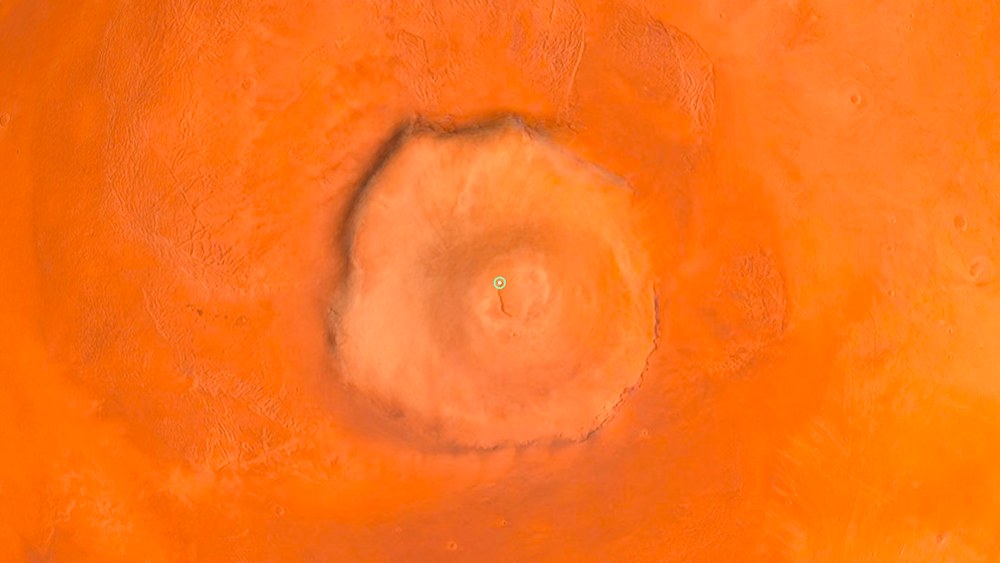
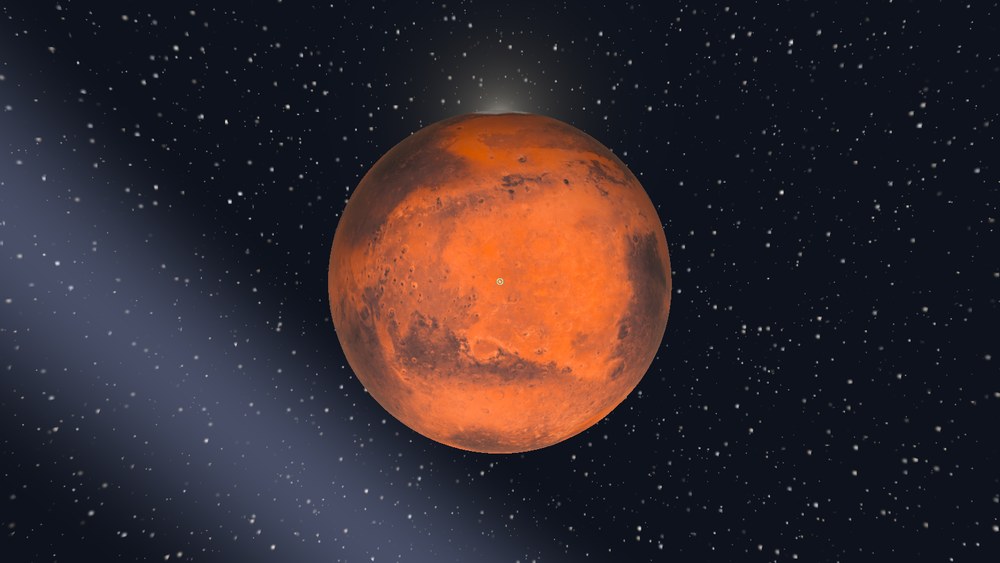
The base version uses the global MOLA elevation map. An optional science pack adds combined HRSC/MOLA data and is installed separately.
1:1 scale means the planet radius, the distances and the elevation differences are not squeezed into an ordinary game arena. It does not mean that every rock reproduces a specific place on Mars: the resolution of the source maps is limited, so small details are generated procedurally.
The terrain takes part in the game: Robosomas walk around slopes that are too steep, buildings need a level site, the camera follows the surface, and the ship lands with the local elevation in mind.
Mean pressure at the surface of Mars is about 0.6% of the pressure on Earth, and it changes with altitude and season. Atmospheric density, meanwhile, is around 1-2% of Earth's: pressure and density are not the same thing.
Sound exists on Mars. Because the carbon-dioxide atmosphere is thin, it is quieter, travels more slowly and loses high frequencies faster. A Martian machine would therefore not be silent, but hearing it from a distance is harder than on Earth.
Source: NASA — Sounds of Mars.
During an ordinary trip the Strizh does not follow a pre-recorded trajectory. The model accounts for mass, thrust, fuel consumption, Martian gravity and simplified atmospheric drag. A loaded ship accelerates more slowly, and a touchdown that is too fast or sideways ends in a crash.
What is simplified: there is no full aerodynamics, no wind, no hull heating, no material fatigue and no per-part strength. The introductory flight is sped up so the landing does not take real time. This is a game physics model, not a certified simulator.
The ship needs methane and oxygen. The atmosphere alone is not enough: hydrogen requires water.
This is based on real ISRU directions — the use of local resources. Building sizes, production rates and trip volumes are tuned for play and are not the design of a real plant.
The four-legged design is inspired by existing research robots, but the Robosoma itself is an invented machine of the future. Its speed, autonomy and ability to build other machines are engineering assumptions of the game world.
Modern NASA radioisotope systems use plutonium-238. Americium-241 is being studied in European programmes, but it is not yet a production power source for Martian robots. The parameters of the Robosoma power cell therefore belong to the fiction, not to a finished technology.
Robosoma is not connected with the makers of Spot, ANYmal or any other current platform.
Sources: NASA — Radioisotope Power Systems; UK National Nuclear Laboratory — Am‑241.
Dust storms, wind, radiation damage and a detailed thermal regime are not implemented yet.
There is no full structural strength, no wear of every mechanism and no chemical impurities of a particular deposit.
The global relief is real, but the specific placement of resources is generated by the game.